ABA therapy does not always have to happen in a clinic. With virtual services, your child can connect with a therapist from the comfort of home while you remain close by and involved in the process.
For many families, this can make therapy easier to fit into an already busy schedule. There is no drive to a clinic, no waiting room, and no need to adjust your entire day around travel.
But convenience is only one part of the decision. When looking for a virtual ABA therapist, parents should also consider qualifications, communication, treatment methods, technology, and how well the provider can engage their child through a virtual setting.
Virtual ABA therapy uses secure video sessions to connect your child with an ABA professional remotely. Depending on your child’s age, needs, and treatment goals, sessions may include structured activities, play-based learning, communication practice, and parent-guided strategies.
Parents and caregivers can also be more directly involved. You may be asked to participate in activities, help set up the environment, or practice strategies with your child between sessions. This approach can make therapy part of your child’s regular routine without requiring frequent trips outside the home.
Virtual ABA therapy can be a practical option for families who want professional support while keeping sessions at home.
Your child can participate from a space they already know. Familiar surroundings may help some children feel more comfortable and ready to engage during sessions. A virtual ABA therapist can also help parents incorporate treatment strategies into everyday routines at home.
Because parents and caregivers are nearby, they can play an active role during therapy. You can learn what strategies the therapist uses and how to continue supporting your child’s goals after the session ends.
Getting to therapy several times a week can be difficult for busy families, particularly when appointments involve long drives. Virtual services remove that part of the routine. You simply need an appropriate space, a reliable internet connection, and the technology required for the session.
Virtual therapy can make it easier to build sessions around your family’s schedule. Instead of spending additional time traveling, that time can be used for school, family activities, or other responsibilities.
Not every virtual ABA program will work equally well for every child. Before choosing a provider, take time to understand how their program works and whether it fits your child’s needs.
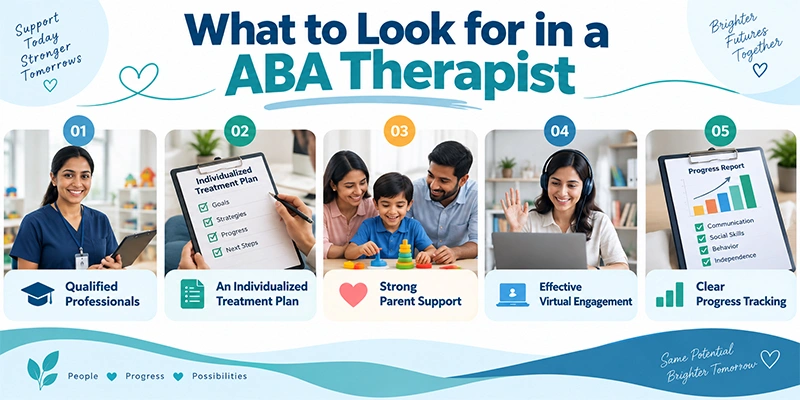
Ask about the professionals who will oversee and provide your child’s treatment. A Board Certified Behavior Analyst (BCBA) may develop treatment goals, review progress, and supervise the ABA team. You can also ask about their experience providing ABA services virtually.
Your child’s therapy should be based on their specific strengths, needs, behaviors, communication skills, and goals. A good virtual ABA therapist should take these factors into account rather than relying on the same approach for every child.
Virtual ABA often requires active participation from parents or caregivers. Ask how much involvement is expected and whether the provider offers guidance and parent training. The therapist should make you feel supported rather than leaving you to figure things out on your own.
Keeping a child engaged through a screen can require a different approach. Ask how the therapist handles distractions, maintains participation, and adapts activities when your child loses interest. The right virtual ABA therapist should be comfortable adjusting sessions based on your child’s response.
Ask how treatment goals are measured and how progress is shared with your family. Regular updates can help you understand what your child is learning and whether their treatment plan needs to be changed.
A conversation with a potential provider can help you determine whether virtual therapy is a good fit. Consider asking:
Their answers can give you a clearer idea of what the experience will actually be like.
We begin by reviewing your insurance plan, discussing potential costs, and gathering information about your child. Our team also assists with required authorizations and paperwork.
The assessment helps our team understand your child’s communication, behavior, strengths, challenges, and treatment needs. Parents and caregivers also have an opportunity to share their concerns and goals.
Based on the assessment, the team develops an individualized plan around your child’s needs. Goals may focus on communication, social skills, daily living skills, self-care, behavior, or greater independence.
Your child can connect with their virtual ABA therapist from home through secure virtual sessions. Depending on their treatment goals, sessions may include structured activities, interactive learning, play-based approaches, and parent-supported practice. Our team also keeps you informed about progress and provides guidance on supporting your child’s skills outside of scheduled sessions.
Choosing a virtual ABA therapist is more than finding someone who offers online sessions. You want a provider who understands your child’s needs, communicates well with your family, and knows how to make virtual therapy engaging and meaningful.
For the right child and family, virtual ABA therapy can provide professional support without making regular travel part of your routine.
If you’re looking for a virtual ABA therapist near you, Empower Therapy can help you explore your options and understand what virtual ABA services may look like for your child. Contact our team to learn more and take the next step.