Recently, if your child has been diagnosed with autism spectrum disorder (ASD), the first question that sparks your mind is whether your ABA Therapy Insurance covers the treatment. The answer to this may vary due to different reasons, including your health insurance plan and policy-specific benefits.
Over the years, health care providers, families, and advocacy organizations have helped bring about changes in insurance coverage for ABA therapy across the United States. Now, every state has developed some form of autism insurance legislation, but the coverage, eligibility, and benefits may vary.
Understanding your ABA Therapy Insurance before treatment begins can help you stay aware of the expenses and ensure your child receives care without unnecessary delays.
Self-funded employer health plans are regulated primarily by federal law rather than state insurance regulations. In these plans, the employer determines which healthcare services are covered.
Unfortunately, ABA therapy may not always make the cut on these plans due to a lack of legal obligation, but as a result of the federal mental health parity law, there is an encouraging shift towards increased coverage for ABA treatment within self-funded plans.
Fully insured health plans are purchased through an insurance company and must comply with state insurance regulations. Every state has implemented autism insurance legislation requiring qualifying health plans to provide coverage for ABA therapy, although eligibility requirements, annual benefit limits, age restrictions, and authorization guidelines may differ by state.
Reviewing your policy details is the best way to understand exactly what your ABA Therapy Insurance includes.
Numerous states have declared laws mandating insurance companies to cover autism treatments, particularly Applied Behavior Analysis (ABA) therapy. In fact, all states have embraced some form of declaration aimed at ensuring individuals with autism can access necessary therapies without any hindrance.
However, the details vary from state to state. Some states may have specific requirements related to age limits, annual coverage maximums, provider qualifications, or prior authorization. Medicaid coverage for ABA therapy may also differ depending on your state’s program.
Because regulations continue to evolve, it’s important to verify your benefits before beginning treatment.
Early diagnosis and intervention can improve developmental outcomes, making it easier to understand your insurance coverage as soon as possible.
The first step towards uncovering your insurance coverage is to identify the type of plan you are enrolled in. First, gather all necessary information about your specific plan, and delve deeper into understanding if ABA therapy is covered. This will keep you aware of any potential limitations or exclusions that may impact claims. The Key Steps Unveiled
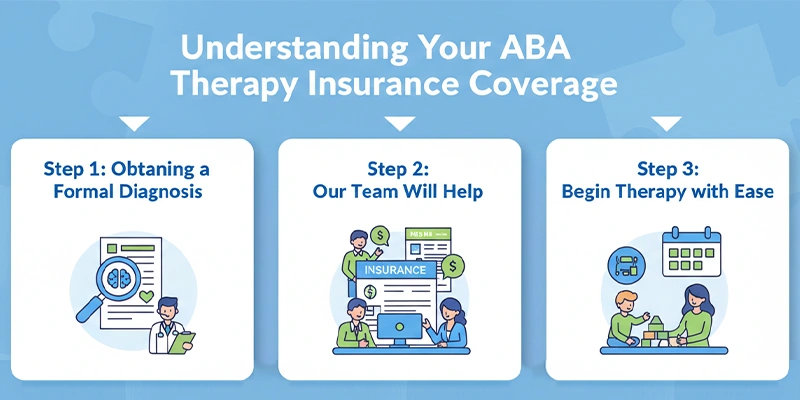
Secure insurance coverage by obtaining a formal diagnosis to ensure that your child receives the necessary support and treatment. It is important to obtain a formal diagnosis from a qualified specialist, such as a pediatrician, psychologist, or developmental specialist.
Once you receive your insurance card information, our experts will verify what services are covered and explain your coverage in clear terms, and help you understand deductibles, copays, authorization requirements, and any out-of-pocket expenses before therapy begins.
Many insurance providers require prior authorization before ABA therapy begins. Completing this step early helps prevent delays and confirms that treatment meets your plan’s coverage requirements.
Your deductible is the amount you must pay each year before your insurance begins covering eligible healthcare expenses. Knowing your deductible can help you better estimate treatment costs.
Depending on your insurance plan, you may pay either a fixed copayment for each therapy visit or a percentage of the treatment spending, excluding the deductible. Understanding these costs helps you plan your healthcare expenses.
Every insurance plan includes an annual out-of-pocket maximum. Once you reach this limit, your insurance generally covers eligible services for the remainder of the plan year, which may significantly reduce the cost of ongoing ABA therapy.
Insurance providers periodically review treatment progress. Your child’s Registered Behavior Technician (RBT) and Board Certified Behavior Analyst (BCBA) maintain clinical documentation and progress reports that help support continued authorization when required.
Ensuring your insurance covers ABA therapy requires a deep understanding of your plan, familiarity with relevant laws, and proactive collaboration with providers and insurers. At Empower Therapy, we can guide you and help you understand your specific plan details by discussing options or addressing any discrepancies related to covering ABA therapy costs.
Navigating insurance for ABA therapy requires patience, but with determination and a strategic approach, you can successfully secure the essential coverage for your child. If you’re unsure whether your insurance covers ABA therapy, we’re here to help you understand your benefits and confidently take the next step toward care.